

The short answer: load heavy, sturdy items first against the back wall, build tight even tiers toward the doors, strap each section in place, and make sure everything goes in dry. Put anything you might need early right by the doors.
Before you start
- Estimate your space. One Swiftbox holds about 2 to 3 rooms. Our Storage Calculator shows how full yours will get.
- Gather supplies. Sturdy boxes in a few sizes, packing tape, moving blankets or pads, stretch wrap, ratchet straps and a good padlock.
- Sort first. Set aside what you'll need while the container is closed up: documents, medications, chargers and a few days of clothes.
Load from the back wall forward
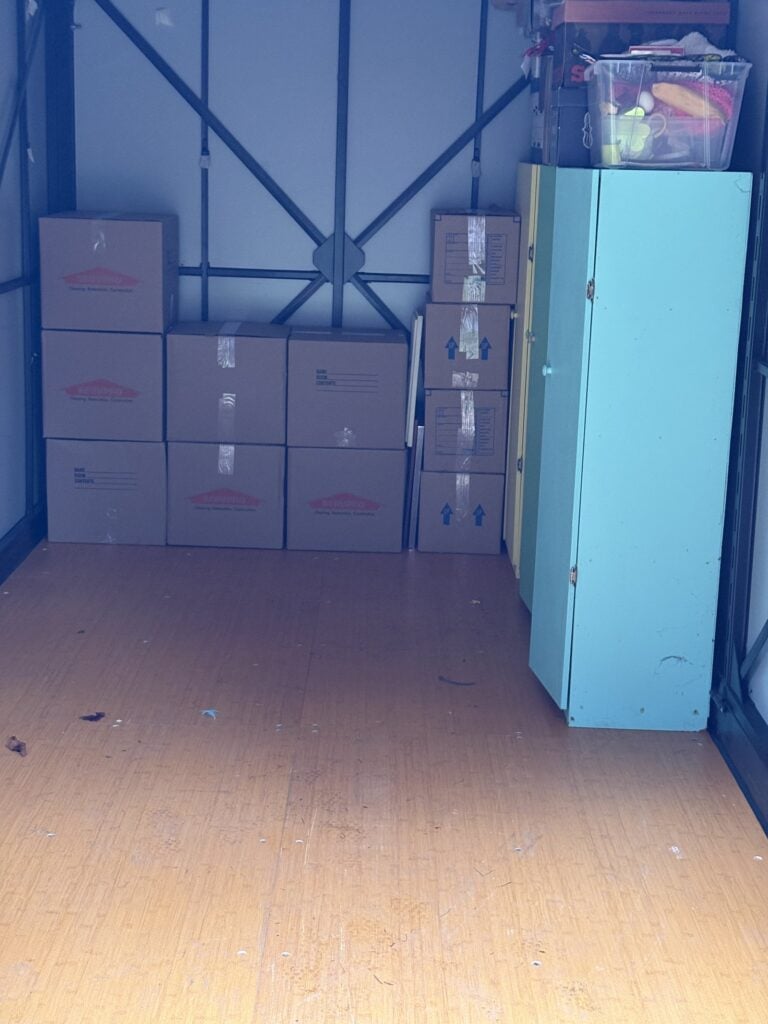
- Heaviest first. Appliances, dressers, cabinets and full boxes go against the back wall, low and centered.
- Build tiers. Stack boxes heavy-to-light, floor to ceiling, in tight rows across the width. Gaps let things shift.
- Long items along the walls. Mattresses, headboards, table tops and sofas stand on end along the side walls.
- Fill the gaps. Pillows, cushions and soft bags fill empty spaces so nothing slides.
- Last in by the doors. Anything you might need early goes in last.
Strap it in and protect your furniture
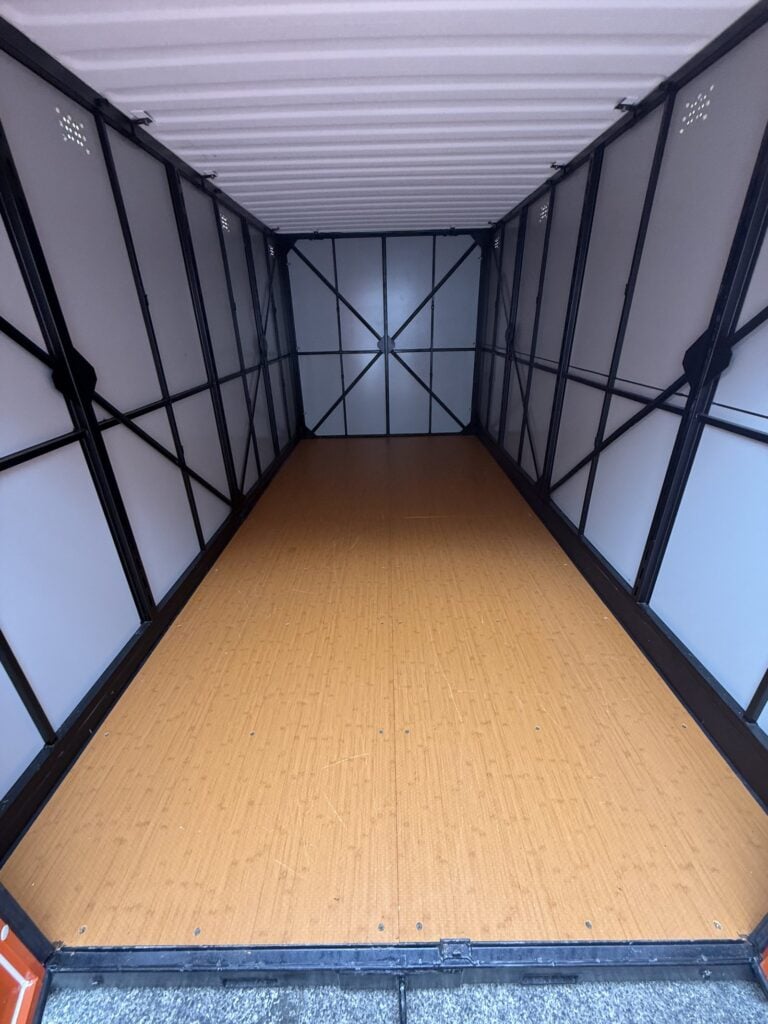
Every Swiftbox has built-in E-track and tie-down rings. Use ratchet straps to secure each section as you go, especially before the container is moved. Wrap furniture in moving blankets, wrap upholstered pieces in stretch wrap, and protect corners and glass. Our level-lift loading keeps the container flat when it's moved, and good strapping keeps your load exactly where you put it.
Keep it dry in Pacific Northwest weather
Every Swiftbox is a weatherproof steel container with sealed doors, built-in ventilation and an anti-condensation ceiling, so rain stays outside. The bigger risk in our climate is the damp air itself, especially through fall and winter, so a few simple habits keep everything inside fresh and dry.
- Load things dry. Never pack damp rugs, cushions, tents or anything fresh from the rain.
- Clean and dry appliances. Drain washers, defrost and dry fridges and freezers, and prop doors open slightly.
- Add a desiccant. Moisture absorbers, like desiccant bags or hanging moisture-absorber packs, are a smart extra step in our moist air. Place a few around the container, especially for longer storage or winter months, and swap them out if you visit.
- Leave a little airflow. Swiftbox containers have built-in ventilation and an anti-condensation ceiling, so avoid sealing everything in plastic bags. Breathable covers work best.
- Close up quickly in the rain. Keep the doors shut between loads on wet days.
Lock it up
Use any padlock you like; we recommend a disc lock. It's harder to cut than a standard padlock.
Common questions
What should I load first?
The heaviest, sturdiest items: appliances, dressers and full boxes go against the back wall first, low and centered.
How do I keep things from shifting?
Pack in tight tiers, fill gaps with soft items, and strap each section to the built-in E-track and tie-down rings.
How do I prevent mold or moisture?
The container is weatherproof steel with ventilation and an anti-condensation ceiling. Load only items that are completely dry, drain and dry appliances, avoid sealing things in plastic, and add a few desiccant bags or moisture absorbers for our damp Northwest air.
What lock should I use?
Any padlock works. We recommend a disc lock because it is harder to cut.